

Hey there! As a supplier of driveshaft shaft drives, I've seen my fair share of issues with these crucial components. In this blog, I'll be talking about the common problems you might encounter with a driveshaft shaft drive.
1. Vibration
One of the most noticeable problems with a driveshaft is vibration. You'll feel it in the steering wheel, the floorboards, or even the seats. This vibration can range from a slight annoyance to a severe shaking that makes driving uncomfortable and even dangerous.
There are a few reasons why a driveshaft might start vibrating. First off, it could be due to an imbalance. Over time, the driveshaft can become unbalanced because of wear and tear, or if some parts get damaged. For example, if the weights that are used to balance the driveshaft fall off or get bent, it can cause an imbalance.
Another cause of vibration could be a worn-out universal joint (U-joint). U-joints are what allow the driveshaft to flex and move as the vehicle goes over bumps and turns. When these joints wear out, they can create a looseness in the driveshaft, leading to vibration. If you've got a vehicle like the Drive Shaft for Toyota Alphard, a worn U-joint can really mess with your driving experience.
2. Noise
Unusual noises coming from the driveshaft area are also a common problem. You might hear clunking, rattling, or even a high-pitched whining sound.
Clunking noises often indicate a problem with the U-joints or the slip yoke. The slip yoke is the part of the driveshaft that slides in and out to allow for changes in length as the suspension moves. If the U-joints are worn or the slip yoke is loose, it can cause a clunking sound when you accelerate, decelerate, or shift gears.
Rattling noises could be a sign of a loose or damaged driveshaft component. It might be something as simple as a loose bolt or a more serious issue like a cracked driveshaft tube. And that high-pitched whining sound? That could be due to a lack of lubrication in the U-joints or a problem with the differential, which is connected to the driveshaft.
3. Difficulty Turning
If you're having trouble turning your vehicle, the driveshaft could be to blame. A malfunctioning driveshaft can affect the way power is transferred to the wheels, making it harder to steer.
This problem is often related to a problem with the U-joints or the CV joints (constant velocity joints). In vehicles with front-wheel drive or all-wheel drive, CV joints are used instead of U-joints in some cases. If these joints are worn or damaged, they can restrict the movement of the driveshaft and make it difficult for the wheels to turn smoothly. For instance, in a Drive Shaft for ford Mondeo, a faulty CV joint can really throw off your steering.
4. Leaking Grease
Grease leaking from the driveshaft area is another red flag. The U-joints and other components of the driveshaft are usually lubricated with grease to reduce friction and wear. If you notice grease on the ground under your vehicle or on the driveshaft itself, it could mean that the seals around the U-joints are damaged.
When the seals are damaged, dirt and moisture can get into the U-joints, causing them to wear out faster. This can lead to more serious problems down the road, like the vibration and noise issues I mentioned earlier.
5. Excessive Wear
Over time, the driveshaft will naturally experience some wear. But excessive wear can be a problem. This can be caused by a variety of factors, including driving on rough roads, towing heavy loads, or not maintaining the driveshaft properly.
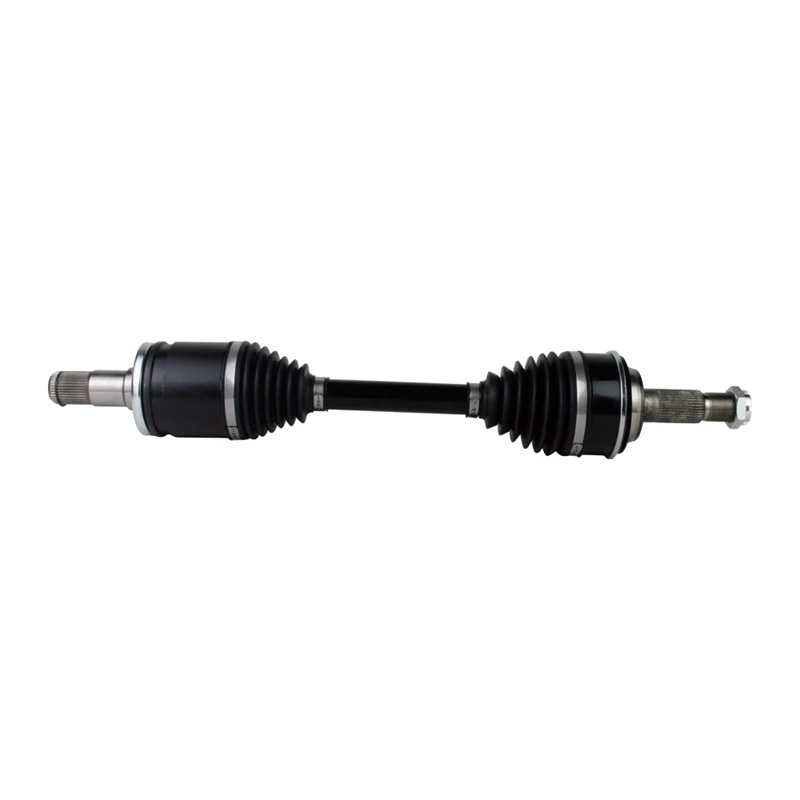

If the driveshaft is exposed to a lot of stress, the metal can start to fatigue and crack. This is especially true for vehicles like the Drive Shaft for 2013 G3 Byd that might be used for different types of driving conditions. Cracked driveshafts are extremely dangerous because they can break while you're driving, causing a complete loss of power to the wheels.
6. Misalignment
Misalignment of the driveshaft can also cause problems. This can happen if the vehicle has been in an accident or if the suspension components have worn out. When the driveshaft is misaligned, it can put extra stress on the U-joints and other components, leading to premature wear and failure.
You might notice that the vehicle pulls to one side or that the steering feels off. Misalignment can also contribute to the vibration and noise issues we talked about earlier.
Solutions and How We Can Help
Now that we've covered the common problems, let's talk about solutions. If you're experiencing any of these issues, it's important to get your driveshaft checked out as soon as possible. A professional mechanic can diagnose the problem and recommend the best course of action.
As a driveshaft shaft drive supplier, we offer high-quality replacement parts for a wide range of vehicles. Whether you need a Drive Shaft for Toyota Alphard, a Drive Shaft for ford Mondeo, or a Drive Shaft for 2013 G3 Byd, we've got you covered.
Our driveshafts are made from top-notch materials and are designed to meet or exceed the original equipment manufacturer (OEM) specifications. We also offer expert advice and support to help you make the right choice for your vehicle.
If you're in the market for a new driveshaft or just have some questions about the ones we offer, don't hesitate to reach out. We're here to help you keep your vehicle running smoothly and safely. Contact us to start the procurement process and let's have a chat about how we can meet your driveshaft needs.
References
- Automotive Repair Manuals
- Industry Technical Bulletins
- Manufacturer's Specifications